Omo Valley Tribes – Ethiopia’s Living Museum of Humanity
Discover the cultural diversity of southern Ethiopia, where traditions remain vibrant and authentic.
Explore Ethiopia’s Omo Valley tribes. Discover the Mursi, Hamar, Karo, and Dassanech communities, their rituals, body art, and traditions in a UNESCO‑recognized cultural landscape.
Omo Valley Tribes – Ethiopia’s Living Museum of Humanity
The Omo Valley is home to some of Africa’s most fascinating and culturally distinct tribal communities. From the Mursi to the Karo, Hamar, and Suri peoples, each group maintains unique traditions, languages, and body adornment practices. This immersive journey goes beyond tourism into genuine cultural exchange, allowing visitors to witness and participate in daily life, ceremonies, and traditions that have endured for centuries. Experience the warmth and hospitality of communities that welcome respectful travelers into their world.
Highlights
- Meet the Mursi people famous for their lip plates tradition
- Visit Karo villages and learn about body painting practices
- Experience Hamar bull-jumping ceremony (seasonal)
- Learn from the Suri people about their unique cultures
- Participate in village daily activities and meals
- Witness authentic tribal markets and gatherings
- Stay in locally-run eco-lodges supporting communities
- Over 16 distinct tribes with unique traditions
- Authentic cultural encounters guided respectfully
Key Tribes and Ceremonial Activities
Mursi Tribe
The Mursi, who live in Mago National Park near Jinka, are one of the most iconic tribes of the Omo Valley. Women wear dramatic clay lip plates, symbols of resilience and identity, while scarification marks bravery and beauty. Their pastoralist lifestyle revolves around cattle, which remain central to wealth and social status. The Mursi are also known for the Donga stick‑fighting tournaments — ritualized combat between men that demonstrates strength, honor, and readiness for adulthood.
Hamar Tribe
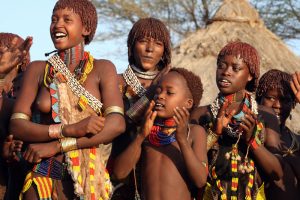
The Hamar, settled around Turmi, are celebrated for their ochre‑colored hairstyles, copper bangles, and vibrant attire. Their ceremonies are deeply communal and colorful. The Ukuli Bula bull‑jumping rite marks a young man’s passage into adulthood, while the Evangadi Dance brings youth together in evenings of chanting, drumming, and joyful celebration. These traditions embody the Hamar’s strong sense of community and continuity.
Karo Tribe
Living along the Omo River, the Karo are masters of body painting. Using chalk and ochre, they create elaborate designs that change daily, reflecting creativity and resilience. Their artistry is tied to festivals and social gatherings, where body painting becomes both a cultural expression and a communal celebration. Fishing and small‑scale farming sustain their lifestyle, blending practicality with artistry.
Dassanech Tribe
The Dassanech inhabit the Omo Delta and are known for their adaptability in a challenging environment. Hairstyles often incorporate beads and recycled materials, reflecting resourcefulness. Their most important ceremony is the Dimmi initiation ritual, a rite of passage for young men that involves endurance and community recognition. This tradition underscores resilience and the importance of belonging.
Suri Tribe (Surma)
The Suri, living in the southwest Omo Valley, are renowned for bold body painting, lip plates, and decorative scarification. Like the Mursi, they practice Donga stick‑fighting contests — intense duels that symbolize bravery and social status. These ceremonies are central to their cultural identity and remain a living tradition passed down through generations.
Arbore Tribe (Erbore)
The Arbore people, near Lake Chew Bahir, are pastoralists distinguished by their beadwork, black headscarves, and layered necklaces. Their ceremonies revolve around seasonal music and dance festivals, which celebrate pastoral life and reinforce communal ties. Visitors often remark on the warmth and hospitality of Arbore communities during these gatherings.
Konso People (UNESCO)
The Konso, recognized by UNESCO, inhabit the rugged highlands and are celebrated for their terraced agriculture and stone‑walled villages. Their funerary traditions include the erection of Waga grave markers — wooden statues that honor ancestors and heroes. These ceremonies reflect centuries of resilience and sustainable living, making Konso culture a model of adaptation and continuity.
Dorze Tribe
In the highlands near Arba Minch, the Dorze are renowned for weaving traditions and distinctive beehive‑shaped bamboo houses. Their ceremonies often involve weaving demonstrations and communal feasts, where visitors can taste kocho bread made from false banana. Textile artistry is central to Dorze identity, and their cultural practices highlight creativity and hospitality.
Derashe Tribe
The Derashe, based in the Gidole highlands, are known for their agricultural heritage and vibrant musical traditions. Their most famous ceremony is the Filla Dance, performed with bamboo wind instruments of varying lengths. Each pipe produces a single pitch, and when played together in interlocking rhythms, they create a hypnotic wall of sound. Dancers move in unison with the music, symbolizing unity and pride in a tradition unique to the Derashe.
Gallery